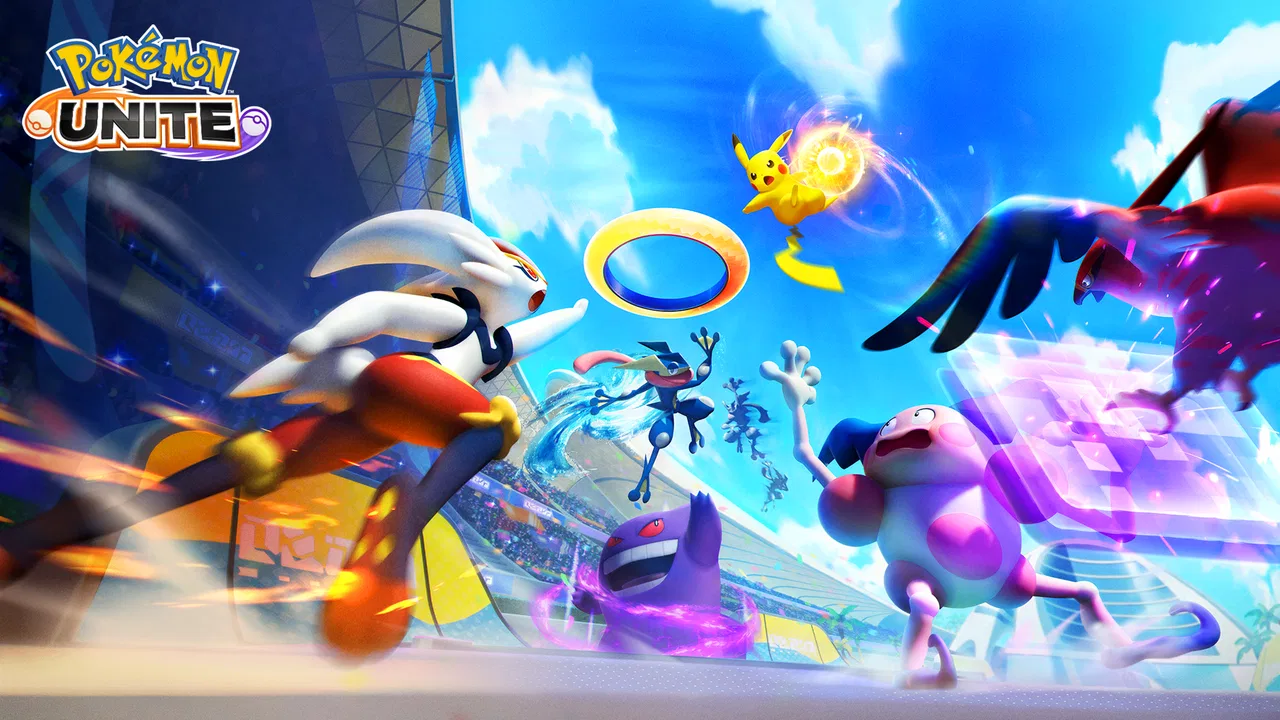
Pokémon UNITE
- 4.4
- Rating
- 100.00M
- Installs
- Free
- Price

 Analysis by App-foxy
Pokémon UNITE is the kind of action game I open when I want a match with a clear beginning, middle, and end rather than an endless campaign. Its central idea is simple to understand: two teams of Pokémon compete in a structured arena, and each player has a role to play. What makes it more demanding than a casual Pokémon spin-off is the need to make quick decisions while watching the whole team. I found that the most enjoyable sessions came when I treated every match as a short strategy exercise, not merely as a battle between individual characters.
The game is developed by The Pokémon Company and is free to download, although optional in-app purchases range from $0.49 to $99.99 per item. It is rated Everyone 10+, runs on Android 5.0 or later, and its current version is 1.21.1.1. Those details make it broadly accessible, but accessibility should not be confused with simplicity. The basic controls are approachable, while the better decisions take practice: when to push, when to retreat, when to help a teammate, and when not to chase an opponent across the map.
How Pokémon UNITE feels in actual play
I find the most useful way to judge a match is to notice how one decision changes the next: an attack can create room, a retreat can preserve a teammate’s chance to regroup, and a rushed chase can undo both. That cause-and-effect is what gives the action its texture beyond quick controls. The next section looks at how the game’s moment-to-moment feedback helps me tell whether a choice is working.
You May Also Like

 Pandora - Music & Podcasts
Pandora’s Music Is Easy to Start, but Harder to Recover
Pandora’s strength is its low-effort path from a seed to a station. Its weak spot is how much confidence it asks you to place in connection, setup, and quiet recovery.

 AccuWeather: Weather Radar
AccuWeather Review: A Quick, Clear Forecast for Everyday Decisions
For everyday plans, the best forecast is the one you can understand quickly. AccuWeather makes rain timing, radar, and local conditions easy to act on, with a few trade-offs.

 Hill Climb Racing
Why Hill Climb Racing Still Turns Crashes Into One More Run
A tiny car, a bumpy hill and one more upgrade: Hill Climb Racing keeps resurfacing because its simple chaos makes every near-miss feel personal.

 AliExpress - Shopping App
AliExpress Makes Global Shopping Feel Personal, but Shoppers Bear the Risk
AliExpress turns a global marketplace into a pocket-sized discovery engine. Its reach is useful, its shopping loop compelling, and its trade-offs easy to miss.

 Lords Mobile: Kingdom Wars
Lords Mobile Is a Kingdom-Building Routine, Not a Quick Match
A case-by-case verdict on the building, battles, device demands, and social commitments that make Lords Mobile rewarding for some players and exhausting for others.

 PDF Scanner app - TapScanner
TapScanner Makes Paperwork Easier to Capture, Check, and Share
TapScanner makes scanning with a phone feel less like a rescue operation and more like a dependable step in getting work done. Its capture tools are useful, though not flawless.
More From Our News Desk
View All News


Quick to start, but not always easy to master
My first impression was that the game gets me into the action quickly. The match format is much more convenient than a traditional role-playing game when I only have a little free time. I can choose a Pokémon, enter a team battle, and immediately have something meaningful to do. That makes it a good fit for a commute, a short break, or an evening when I do not want to commit to a long story chapter.
The speed of a match is not only about how fast the app opens. It is also about how quickly I can understand what is happening. Early in a game, the battlefield feels manageable. I can focus on collecting resources, helping nearby teammates, and looking for safe opportunities. Later, several objectives and team movements may demand attention at once. The pace then becomes more mentally intense, even when the controls remain straightforward.
I would not describe the experience as a button-mashing game. Attacking at the wrong time can leave a Pokémon exposed, and moving too far away from allies can turn a promising push into an easy loss. The most useful habit I developed was checking the wider situation before committing to a fight. A small pause to see where teammates are positioned often mattered more than pressing an ability immediately.
What happens during heavy-use moments
The busiest moments usually arrive when both teams gather in the same area. Several attacks can overlap, health bars can change quickly, and a player may need to choose between helping an ally, securing an objective, or backing away. These moments are where the game feels most exciting, but they are also where mistakes become expensive.
I noticed that performance expectations should be realistic for a mobile action game with several characters and effects appearing together. A phone that feels perfectly comfortable during menus and quiet movement may feel less relaxed during a crowded team confrontation. I would avoid judging the entire experience from the opening minutes alone. If your device is older, the most demanding part of the session is likely to be a large engagement rather than simple travel around the arena.
There is also a practical battery consideration. A match-based action game naturally asks more from a phone than a turn-based puzzle or a basic card game. I would not choose it as my first option for a long session away from a charger if battery life is already a concern. For short sessions, that trade-off feels reasonable; for repeated matches, heat and battery use become part of the decision.
A useful tactic is to avoid treating every encounter as a must-win fight. When several opponents are visible and your team is not nearby, retreating can preserve time and prevent an unnecessary defeat. This is one of the less obvious lessons for new players: good performance is often about reducing bad engagements, not creating constant action. That approach also makes the game feel less frantic on a device that struggles when the screen becomes crowded.
Reliability depends on more than the app itself
In my experience, the game is at its most reliable when the phone has enough breathing room and the connection is steady. The controls make sense once I have spent time with them, and the match structure gives me a clear sense of progress even when a game does not go my way. I also appreciate that the Pokémon theme gives each match a recognizable identity instead of making the battlefield feel like an anonymous competitive arena.
Online team play brings a limitation that no mobile setting can completely remove: the quality of a match depends partly on other people. Teammates may make different decisions, fail to support an objective, or pursue a fight that I would avoid. That can be frustrating, especially when I am trying to play carefully. I found it healthier to focus on repeatable decisions—staying near useful allies, choosing safer routes, and protecting a lead—rather than expecting every player to coordinate perfectly.
Recovery after a poor start is possible, but it is not automatic. A team that falls behind needs to stop giving away isolated defeats and use its remaining opportunities intelligently. I like that the game can still feel competitive after an early mistake, but players looking for a completely relaxed experience may dislike how much attention a comeback requires. The action is accessible; the concentration is not always casual.
One practical recovery habit is to change the goal after losing a major exchange. Instead of immediately returning to the same location for revenge, I look for a safer way to gather resources, defend a vulnerable area, or join the next team movement. This prevents a single mistake from becoming a chain of rushed decisions. It is a small change, but it helped me recover more often and reduced the feeling that a bad opening had already decided everything.
Device limits and everyday use
Because the game supports Android 5.0 and later, its stated operating-system requirement is not especially restrictive. Still, the operating system is only one part of the experience. A phone can meet the minimum software requirement and still offer a less comfortable session if it has limited storage, an aging battery, weak cooling, or modest hardware. I would treat the minimum OS as a compatibility starting point, not a promise of identical performance on every device.
On a newer or reasonably capable phone, the game is easier to recommend for regular play. The screen needs to remain responsive while I move, aim, and react, so a device with a tired touch panel can make the experience more frustrating than the game itself. A larger screen may also make crowded battles easier to read, although it does not remove the need to learn the battlefield.
Before installing, I would make sure the phone has comfortable free storage and that unnecessary background apps are closed. I would also avoid playing while the device is already hot. These are ordinary precautions, but they matter more here than they would with a lightweight word game. If performance becomes inconsistent, lowering other demands on the phone is a sensible first step before blaming the controls or the match design.
The game is less suitable for someone who wants a completely offline experience. Its appeal comes from team competition and active decision-making, so it is better suited to players who can give the match their attention. If you regularly lose connection, share a phone with demanding background tasks, or prefer games that can be paused at any moment, a solo puzzle or turn-based alternative may fit your routine better.
Learning the game without wasting matches
New players can make the early experience easier by learning one Pokémon at a time instead of constantly switching characters. Each choice changes how I approach movement, attacks, and team support. Sticking with a familiar option lets me concentrate on positioning and timing rather than relearning controls in every match.
I also recommend watching the map more than the opponent directly in front of me. A nearby fight can be tempting, but the more valuable decision may be rotating to help an ally or defending an exposed area. This is where Pokémon UNITE separates itself from a straightforward arcade brawler. Individual skill helps, but awareness of the team and the battlefield often matters more.
Another useful workflow is to review why a defeat happened before starting the next match. Was I alone, late to an objective, too aggressive, or simply outnumbered? That quick reflection turns losses into practical information. Without it, it is easy to repeat the same mistake while assuming the problem was only an unlucky matchup.
I would not spend money immediately just to make the game feel more approachable. The free entry point is enough to discover whether the match rhythm suits you. Optional purchases may appeal to committed players, but they do not solve the basic learning curve, and no purchase replaces awareness or teamwork. For a new player, time spent understanding positioning is more valuable than rushing to collect extras.
How it compares with other mobile action games
Compared with a traditional Pokémon adventure, this game offers less of the quiet exploration, story progression, and personal journey that many players associate with the series. Its focus is competition between teams, so it is a better choice when I want immediate action and a clear tactical objective. If your favorite Pokémon memories involve building a party for a long solo journey, this may feel very different.
Compared with a simple arena brawler, it asks more from me strategically. I cannot rely only on quick reactions because movement, timing, teamwork, and map awareness all influence the result. That makes the game more rewarding for players who enjoy improving through repeated matches, but it can feel demanding for anyone who wants instant, low-consequence fun.
It also occupies a middle ground between a casual mobile game and a more serious competitive title. The Pokémon presentation makes it inviting, while the team format creates pressure once I start caring about the outcome. I think that balance is its strongest identity. It can be approachable in the first session and still leave plenty to learn after many matches.
Who should play it, and who should skip it
I would recommend it to Pokémon fans who want active multiplayer rather than another collection-focused experience. It is also a good match for players who enjoy short competitive sessions, gradual improvement, and the satisfaction of making a well-timed team decision. The game works especially well for friends who can discuss strategy, although I still found value in playing alone when I was willing to adapt to unfamiliar teammates.
I would be more cautious recommending it to players with unstable connections, older phones that heat up quickly, or very limited battery capacity. It is also not ideal for someone who dislikes losing because of team decisions outside their control. Even a strong individual performance cannot guarantee a smooth match when coordination breaks down.
The age rating of Everyone 10+ makes it broadly approachable, but younger players may still need guidance around competitive frustration and optional spending. Since purchases can reach $99.99 per item, I would use the platform’s purchase controls if children share the device. The free price makes trying the game easy, but responsible spending still matters.
My performance verdict
After spending time with it, I see Pokémon UNITE as a polished idea with a demanding center. Its quick match structure makes it convenient, while the team-based action gives each session more depth than a basic pick-up-and-play brawler. The most important performance question is not whether every phone will feel identical, but whether your device, connection, and play habits can support crowded, attention-heavy battles.
The game has a 4.5 average from around 1.8 million ratings, with over 100 million installs, which reflects a very large player base and makes its popularity easy to understand. Those figures do not change the personal trade-offs: I still need a capable enough phone, a stable connection, and patience for teammates and learning. The current version is 1.21.1.1, and the title has been available since September 21, 2021, giving it a mature place in the mobile action space.
My honest recommendation is to try it for the match experience, not simply for the Pokémon name. If you enjoy making quick tactical choices and can accept that recovery sometimes depends on the whole team, it can become a remarkably satisfying routine. If you want a calm offline game, a story-led adventure, or predictable control over every outcome, another genre will serve you better.
For me, the deciding strength is the way a short session can still contain meaningful choices. I can improve without needing a long play block, and a match can teach me something even when I lose. The main friction is the same feature that creates its excitement: shared team battles are fast, crowded, and dependent on coordination. With that expectation set clearly, Pokémon UNITE is a free action game I can recommend to the right player, especially someone ready to trade complete control for teamwork and tactical momentum.
FAQs for Pokémon UNITE
01What is Pokémon UNITE and how does it differ from other Pokémon games?
Pokémon UNITE is a multiplayer online battle arena (MOBA) game that differs from traditional Pokémon games by focusing on team-based battles rather than turn-based combat. Players form teams of five and compete to score points by capturing wild Pokémon and defeating opponents. The real-time strategy and cooperation elements offer a unique twist to the Pokémon franchise.
02Is Pokémon UNITE free to play, and are there in-game purchases?
Yes, Pokémon UNITE is free to play on both Android and iOS platforms. However, it does offer in-game purchases, such as cosmetic items and battle passes, which can enhance the gaming experience. While these purchases are optional, they provide players with customization options and additional content that can add to the enjoyment of the game.
03What are the system requirements for Pokémon UNITE on mobile devices?
To run Pokémon UNITE smoothly on Android, devices need to have Android 5.0 or higher with at least 2GB RAM. For iOS users, the game requires iOS 10.0 or later and is compatible with iPhone, iPad, and iPod touch. Ensuring your device meets these requirements will help prevent any performance issues during gameplay.
04Can I play Pokémon UNITE with friends, and is there cross-platform support?
Yes, Pokémon UNITE allows you to team up and play with friends, and it supports cross-platform play between mobile devices and the Nintendo Switch. This means you can enjoy battles with friends regardless of the platform they are using, enhancing the social and cooperative aspects of the game.
05What are some strategies for beginners in Pokémon UNITE?
Beginners in Pokémon UNITE should focus on learning the strengths and weaknesses of different Pokémon and how they fit into team roles, such as Attackers, Defenders, and Supporters. It's also crucial to communicate with teammates, prioritize objectives over individual battles, and adapt strategies based on the opposing team's composition to succeed in matches.
Pros
- Engaging strategic gameplay
- Diverse roster of Pokémon
- Cross-platform compatibility
- Frequent updates and events
- Intuitive controls for beginners
Cons
- In-app purchases can be costly
- Matchmaking can be unbalanced
- Occasional server lag issues
- Limited customization options
- Requires stable internet connection

Pokémon UNITE
Gallery